Why Your AC Not Cooling Properly Is a Problem You Shouldn't Ignore
If you're wondering ac not cooling properly what to check, you're not alone — this is one of the most common calls Charleston homeowners make every summer. Before you pick up the phone, there are several quick checks you can do right now that may save you time and money.
Quick answer — check these first:
- Thermostat settings — Make sure it's set to "Cool" and "Auto," not "Fan" or "Heat"
- Air filter — A clogged filter is the #1 cause of poor cooling; replace it if it looks gray or dirty
- Circuit breakers — Check for a tripped breaker in your electrical panel
- Outdoor unit — Clear any debris, grass clippings, or obstructions within 2 feet of the unit
- Vents and registers — Make sure none are blocked by furniture or closed off
- Refrigerant lines — Look for frost or ice on the copper tubing near the outdoor unit
- Condensate drain — A clogged drain line can trigger a safety shutoff
Charleston summers are brutal. When humidity climbs and temperatures push into the 90s, your AC works harder than almost anywhere else in the country. A system that's struggling — running constantly but never quite cooling the house down — isn't just uncomfortable. It can point to a small issue that gets much worse if ignored, or signal something that needs a professional right away.
This guide walks you through exactly what to check, what you can fix yourself, and when it's time to call in an expert.
AC Not Cooling Properly What to Check: A Homeowner's Guide
When the air stops feeling crisp, the first place we always tell our neighbors in Mount Pleasant and West Ashley to look is the thermostat. It sounds simple, but you’d be surprised how often a system is "broken" simply because a family member bumped the settings or a battery died.
Start with the Thermostat
First, verify that the thermostat is actually set to "Cool." If it was accidentally switched to "Heat" or "Off," the system won't engage. Another common culprit is the Fan setting. If your fan is set to "On" instead of "Auto," the blower will run 24/7, even when the AC isn't actually cooling the air. This results in lukewarm air blowing through your vents between cooling cycles, making the house feel humid and warm.
If your display is blank or flickering, it’s likely time for a battery replacement. Most thermostats require AA or AAA alkaline batteries once a year. If you’ve recently had a power surge or a storm roll through the Lowcountry, you might even need to perform a system reset by turning the thermostat off for a few minutes before restarting it. To understand the mechanics behind this, you can read more about Why Your AC Blows Warm Air in Summer.
The Critical Role of the Air Filter
If the thermostat is fine, the next step in ac not cooling properly what to check is the air filter. In our 20+ years of industry experience, we’ve found that a dirty air filter is the leading cause of cooling failures.
A clogged filter restricts airflow into the system. When the indoor evaporator coil doesn't get enough air moving over it, it can't absorb heat properly. This often leads to the coil literally freezing into a block of ice. We recommend a 30-90 day replacement cycle. However, if you have pets in a home in Summerville or deal with high pollen counts in North Charleston, you should check that filter every 30 days. If you can't see light through the filter when holding it up to a lamp, it’s done. Neglecting this simple task is a primary reason homeowners eventually need Residential HVAC Repair.
Inspecting the Outdoor Condenser Unit and Airflow
While the indoor part of your AC handles the "cooling," the outdoor unit (the condenser) is responsible for dumping the heat outside. If the outdoor unit can’t "breathe," your home won't get cold.
Clearing Debris and Obstructions
Walk outside and look at your condenser. Does it have tall grass growing against it? Are there leaves or pine needles wedged into the metal fins? In coastal areas like Daniel Island or Isle of Palms, we often see landscaping that has grown too close to the unit.
Your AC needs at least 2 feet of clear space on all sides to expel heat efficiently. If you’ve recently mowed the lawn, check for grass clippings stuck to the sides. You can gently rinse the condenser fins with a garden hose on a low-pressure setting. Never use a pressure washer, as it will flatten the delicate aluminum fins and permanently damage the unit. This type of neglect is a common cause of AC Condenser Coil Damage in Daniel Island.
Checking the Power Supply
If the indoor fan is blowing but the outdoor unit isn't humming or spinning, check the outdoor disconnect switch. This is usually a small metal box mounted on the wall near the unit. Sometimes the "pull-out" fuse block isn't seated correctly, or the switch has been bumped. If the outdoor unit has no power, the refrigerant won't circulate, and you'll just be moving warm air around the house. If the unit won't kick on at all, you may be facing a situation where your AC Unit Not Working requires a deeper look at the electrical components.
AC not cooling properly what to check for airflow
Even if the machine is working perfectly, the cool air has to reach your rooms.
- Blocked Vents: Check every room. Is a couch or a heavy rug covering a return grille or a supply vent? This disrupts the "pressure balance" of your home and makes the AC work overtime.
- Closed Registers: Ensure all registers are open. Many homeowners believe closing vents in unused rooms saves money, but it actually increases pressure in the ductwork, which can lead to leaks or blower motor failure.
- Ductwork Leaks: In many Charleston homes, ducts run through sweltering attics or crawlspaces. A disconnected duct can result in you paying to cool your attic while your bedroom stays at 80 degrees. If you notice water spots on your ceiling, it could be related to duct sweat or Dealing with AC Water Leaks Daniel Island.
Identifying Frozen Coils and Electrical Problems
One of the most ironic problems an AC can have is getting too cold. When we talk about ac not cooling properly what to check, we have to mention frozen evaporator coils.
The Thawing Process
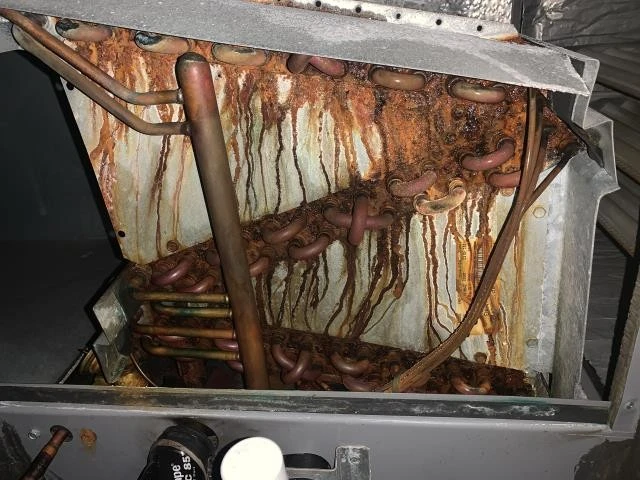
If you see ice on the copper lines leading into your house or frost on the indoor unit, your coils are frozen. This usually happens because of restricted airflow (dirty filter) or low refrigerant. What to do:
- Turn the AC setting to "Off" immediately to prevent compressor damage.
- Turn the Fan setting to "On." This blows warm air over the ice to melt it.
- Wait 2 to 4 hours for the system to thaw completely.
Running the system while it's frozen can lead to "slugging," where liquid refrigerant enters the compressor and destroys it. Once thawed, change your filter and try again. If it freezes back up, you need Charleston Air Conditioning Repair to check for a refrigerant leak.
The Clogged Drain Line
Your AC removes a massive amount of humidity from the Charleston air. This water collects in a pan and flows out through a PVC pipe. If this pipe clogs with algae or "sludge," the water backs up. Modern systems have a "float switch" that will shut the entire system down if it detects a backup to prevent your house from flooding. If your AC won't turn on at all, check the drain pan for standing water.
Symptoms of Dirty vs. Frozen Coils
| Symptom | Dirty Coils | Frozen Coils |
|---|---|---|
| Air Temperature | Lukewarm or slightly cool | Warm or no air at all |
| Airflow Strength | Normal | Very weak |
| Visual Signs | Dust/Grime on fins | Visible ice or frost |
| Sounds | Struggling/Humming | Hissing or silence |
AC not cooling properly what to check for electrical issues
Sometimes the problem is invisible.
- Circuit Breakers: Check your main electrical panel. A power surge during a summer thunderstorm can trip the breaker. Flip it all the way to "Off" and then back to "On."
- Capacitor Failure: The capacitor is like a giant battery that gives the motor the "kick" it needs to start. If you hear a clicking or buzzing sound coming from the outdoor unit, but the fan won't spin, the capacitor has likely failed. This is a very common AC Repair Charleston SC task that our team handles daily.
Signs of Refrigerant Leaks and System Sizing
Refrigerant is the "lifeblood" of your cooling system. A common misconception is that AC units "use up" refrigerant like a car uses gas. In reality, an AC is a closed-loop system. If you are low on refrigerant, you have a leak.
Detecting a Leak
If your system is blowing warm air and you hear a faint hissing or bubbling sound, you likely have a leak. You might also see oily residue on the refrigerant lines or connections. Because refrigerant is a hazardous chemical, homeowners should never attempt to "top it off" themselves. It requires EPA Section 608 certification to handle. If you hear strange noises, check out our guide on What a Hissing AC Means.
Is Your Unit Properly Sized?
Sometimes the AC isn't "broken"—it's just outmatched. HVAC systems are sized according to BTUs (British Thermal Units). If your home in Goose Creek has had a room addition or if the insulation has settled over time, your old unit might be undersized.
A properly sized unit is determined by a "Manual J" calculation, which takes into account your square footage, window orientation, and insulation levels. If your AC runs 24/7 and the temperature never drops below 78 degrees on a 95-degree day, it might be an issue of capacity rather than a mechanical break. For residents in the outlying areas, we provide expert AC Repair Goose Creek SC to help determine if a replacement or a repair is the better path forward.
Frequently Asked Questions
How do I know if my AC is actually cooling?
The best way to verify performance is a "temperature differential" test. Use a standard thermometer to measure the temperature of the air going into the return vent and compare it to the air coming out of a supply vent after the system has run for at least 10 minutes. You should see a 16-20 degree difference. If the split is less than 16 degrees, your system isn't cooling efficiently.
Should I turn off my AC if it isn't cooling?
Yes! If the system is running but the temperature is rising, turn it off. Continuing to run a malfunctioning AC can cause permanent damage to the compressor—the most expensive part of the system. Remember the "3-minute rule": if you turn the system off, wait at least three minutes before turning it back on to allow the internal pressures to equalize.
When should I call a professional HVAC technician?
While DIY checks are great, you should call us immediately if:
- You smell a burning or "electrical" odor.
- The system is rapidly cycling on and off (short-cycling).
- You see ice on the lines that returns after thawing.
- Your system is 10-15 years old and requires frequent repairs. Most systems in the Charleston humidity last about a decade before efficiency drops significantly.
Trust the Charleston Comfort Experts
At Holy City Heating & Air, we understand that a broken AC in May or June is more than an inconvenience—it’s an emergency. As a family-owned local business with over 20 years of industry expertise, we treat our neighbors in Daniel Island, Summerville, and Mount Pleasant like family.
We are proud Daikin Comfort Pro partners, which means our work is backed by the Daikin Comfort Promise and the best warranties in the business. Whether you need a simple capacitor replacement or a full system upgrade to a modern, energy-efficient heat pump, our EPA-certified technicians are ready to help.
Don't spend another night sweating through the Lowcountry humidity. Schedule your professional AC repair today and let us bring the comfort back to your home.