Free second opinion

Storm Center

Prepare, ride it out, recover — the Lowcountry way

The Charleston Storm Center is a hurricane resource hub for Lowcountry homeowners, covering how to prepare your HVAC and plumbing before a storm, what to do while it passes, and how to recover safely afterward. Atlantic hurricane season runs June 1 through November 30, and coastal Charleston homes face storm surge, salt-water flooding, and extended power outages that mechanical systems are especially vulnerable to. Holy City Heating & Air (SC License M113404) answers calls until 9 PM at (843) 790-6504 before, during, and after every storm.

Before the Storm: Prepare


Most hurricane damage to HVAC and plumbing systems is preventable with work done in the calm days before a storm, not the frantic hours ahead of landfall. Use this phase to secure equipment, protect it from power problems, and know exactly where your shutoffs are. For the full homeowner walk-through in narrative form, our hurricane season prep guide pairs with this checklist.

Secure the outdoor unit, do not wrap it

The outdoor condenser is built to live outside in the rain, so plastic wraps and tarps do more harm than good. A wrapped unit traps moisture against the coil and electrical components, and a loose tarp becomes its own projectile in hurricane winds. What the unit actually needs is to be anchored and to have the area around it cleared.

Confirm the unit is bolted to its pad or mounting bracket, and consider hurricane straps or a condenser cage if your equipment sits exposed. Then walk the yard: patio furniture, grills, potted plants, and loose fence boards are what usually damage condensers, not the wind itself.

  • Verify the condenser is anchored to its pad or stand
  • Clear loose yard items within throwing distance of the unit
  • Trim dead or overhanging limbs near outdoor equipment
  • Skip tarps and shrink wraps entirely

Add surge protection before the season peaks

Hurricanes bring repeated power interruptions, and each restoration event can send a voltage spike through your home's wiring. Compressors, circuit boards, and variable-speed motors are among the most expensive components in the house to replace after a surge.

A whole-home surge protector at the panel plus a dedicated HVAC surge protector at the disconnect gives layered protection. Both are modest investments compared to a failed compressor, and both should be installed by a licensed professional before a storm is on the map, not after a watch is issued.

Ask about surge protection with a maintenance visit Contact us to schedule installation

Know when to shut the system down before landfall

If you are evacuating, shut the HVAC system off at the thermostat before you leave, and turn off the breaker if flooding is possible at your address. Equipment that is off cannot short-cycle through outages or take a surge while energized.

If you are staying, run the AC normally and pre-cool the house while power is stable, then plan to shut the system down when sustained high winds arrive or the power begins to flicker. A house that starts cool and stays closed up will hold reasonable comfort for many hours.

Time your pre-storm maintenance, then run the final checklist

A system with a clean coil, tight electrical connections, and a clear condensate drain rides out a storm better and restarts more reliably afterward. Schedule maintenance early in hurricane season, ideally in late spring, because once a named storm enters the forecast, every contractor's schedule fills at once.

In the final day or two before the storm, work through the checklist below. Our hurricane season prep article covers each step in more depth if this is your first Lowcountry storm season.

  • Pre-cool the house while power is stable
  • Replace the air filter so the system restarts clean
  • Photograph equipment and data plates for insurance records
  • Locate and test your main water shutoff valve
  • Charge phones and set the refrigerator to its coldest setting
  • Turn off the HVAC breaker if you evacuate from a flood-prone address

Read the hurricane season prep guide Join a maintenance plan

Flood zones, elevated equipment, and crawlspace units

Much of Charleston, from downtown to James Island to West Ashley, sits in mapped flood zones where storm surge and rain flooding are realistic threats to ground-level equipment. If your air handler, furnace, or water heater sits in a crawlspace or at grade, it is among the first casualties when water rises.

Elevating condensers on stands and relocating crawlspace equipment above the base flood elevation are permanent fixes worth discussing before the season starts. At minimum, know how high water has come on your street before, and cut power to any equipment that could be submerged before you leave.

Crawlspace humidity and flooding guide

Prepare your water shutoff now

Wind-tossed debris and shifting soil can break supply lines, and a burst pipe during a storm floods a home from the inside while no plumber can safely reach you. Every adult in the house should know where the main water shutoff is and how to close it.

Test the valve before the season, because a shutoff that has not been turned in years can seize. If yours is stuck, corroded, or buried, have it repaired or replaced on a calm day. Our water shutoff prep article walks through finding and testing the valve step by step.

Water shutoff prep walk-through Plumbing services

Generator basics: portable versus standby, and the transfer-switch rule

A portable generator can keep a refrigerator and some lights running, but powering an HVAC system or the whole house requires a transfer switch or interlock installed by a licensed professional. Backfeeding a house by plugging a generator into a wall outlet is illegal and can electrocute utility line workers restoring your power.

Standby generators with automatic transfer switches are the safe, permanent answer for whole-home backup, and they must be sized to handle HVAC starting loads. If backup power is part of your storm plan, have that conversation with a licensed contractor well before June.

Talk to us about storm readiness

During the Storm: Stay Safe


Once conditions deteriorate, the priorities are simple: protect people first, protect equipment second, and do not attempt repairs of any kind until the weather passes. Nothing about a comfort system is worth going outside in hurricane conditions.

Should you run the AC during a hurricane

While the power is steady, yes, running the air conditioner is fine and helps control the humidity that a sealed-up house builds quickly. Pre-cooling early in the event buys comfort later.

Shut the system down once sustained damaging winds arrive at your location or if water begins approaching the outdoor unit or any indoor equipment. The house will warm slowly; a compressor damaged by operating through a storm will not recover at all.

Power flickers mean turn the AC off

Repeated flickers are the grid failing and recovering in rapid succession, and each cycle stresses the compressor with voltage sags and spikes. If lights are flickering more than once or twice, turn the air conditioner off at the thermostat and consider switching off its breaker.

Leave the system off until power has been stable for a period after the storm, then restore it. Waiting a few extra hours costs comfort; restarting into an unstable grid can cost a compressor.

Safety — read first

If you smell gas, leave first and call from outside

Storms can shift foundations, snap lines, and damage gas appliances. If you smell gas at any point, do not operate light switches, phones, or anything that can spark. Get everyone out of the house immediately.

From a safe distance outside, call 911 and your gas utility. Do not go back in until responders tell you it is safe, and have any gas-fired equipment inspected before it runs again.

When to shut off water and electricity to equipment

If water starts entering the home or rising toward the outdoor unit, turn off the breakers serving the HVAC system and water heater right away, while it is still safe to reach the panel. Equipment that floods while de-energized is far more likely to be salvageable, and it removes an electrocution hazard from standing water.

Close the main water shutoff if you suspect a supply line has broken, if you hear water running where it should not be, or if authorities report water system damage. You prepared this valve before the storm; this is the moment it pays off.

Water shutoff prep walk-through

Safety — read first

Generator carbon monoxide can kill in minutes

Never run a generator indoors, in a garage even with the door open, in a carport, on a porch, or near any window, door, or vent. Generator exhaust carries carbon monoxide, which is invisible, odorless, and deadly, and it accumulates fast in enclosed or semi-enclosed spaces. Run generators outside only, well away from the house, with the exhaust pointed away from openings.

If a CO alarm sounds, or anyone feels dizzy, nauseated, or unusually sleepy while a generator is running, get everyone outside into fresh air immediately and call 911. Treat a suspected gas smell the same way: leave first, then call 911 and the utility from outside.

After the Storm: Recover


The days after a hurricane are when avoidable damage happens: flooded equipment gets switched back on, humidity feeds mold while everyone is distracted, and out-of-town operators knock on doors. Slow down, document everything, and let licensed professionals clear your equipment before it runs again.

Safety — read first

Do not re-energize flooded equipment

If flood water reached your outdoor unit, air handler, furnace, water heater, or any electrical component of your system, do not turn it back on and do not flip the breaker to test it. Water contaminates motors, controls, wiring, gas valves, and insulation in ways that are not visible from the outside, and energizing flooded equipment risks fire, shock, and further damage that turns a repairable system into a total loss.

Leave the breakers off and have a licensed professional inspect the equipment first. This is a hard rule with no exceptions, and it applies even if the water has fully receded and the equipment looks dry.

Request a post-storm inspection

Salt water and fresh water flooding are not the same

In Charleston, storm surge means salt water, and salt water is generally far more damaging to mechanical equipment than fresh rainwater flooding. Salt is corrosive and conductive; it attacks coils, contactors, wiring, and fasteners, and the corrosion continues after the water is gone.

Equipment submerged in surge often needs replacement where the same depth of fresh water might have allowed component-level repair. Be upfront with your technician and your insurer about which kind of water reached the equipment, because it changes the honest recommendation.

Get a professional inspection before restart

Even equipment that never flooded deserves a look before returning to normal service after a major storm. Wind-driven rain in electrical compartments, debris in the condenser coil, a shifted pad, or a lightning-stressed circuit board can all hide behind a system that appears to run normally at first.

A post-storm inspection covers electrical connections, refrigerant circuit integrity, drainage, and combustion safety on gas equipment. It is a short visit that catches problems while they are small.

AC repair Water heater service

Document damage for insurance before anything is moved

Before cleanup begins, photograph and video everything: high-water marks, the equipment in place, debris, and visible damage from multiple angles. Then photograph the data plates showing model and serial numbers on every affected piece of equipment, because adjusters will ask for them and plates on discarded equipment are gone forever.

Keep receipts for emergency expenses and write down dates and times while they are fresh. A written inspection report from a licensed contractor documenting storm-related damage is strong support for a claim; policies vary, so confirm coverage details with your insurer.

  • Photograph high-water marks and equipment before touching anything
  • Capture model and serial number plates on all affected equipment
  • Save receipts for emergency repairs and temporary measures
  • Request a written condition report from your inspecting contractor

Control humidity fast to stop mold

Mold can establish itself in damp materials within a couple of days, and a post-hurricane Lowcountry house with no power and standing moisture is ideal for it. Once conditions are safe, open the house up, remove soaked materials, and get air moving.

When power returns and the system has been cleared to run, air conditioning and dedicated dehumidification are your main tools for pulling the house back below the humidity levels where mold thrives. Crawlspaces deserve special attention, because they hold flood moisture long after living spaces feel dry.

Indoor air quality services Crawlspace humidity and flooding guide

Watch for storm-chaser contractor scams

After every major storm, out-of-town operators sweep through damaged neighborhoods. The warning signs are consistent: out-of-state plates, door-to-door solicitation, demands for cash or large deposits up front, pressure to sign today, vague paperwork, and no South Carolina mechanical license they can show you.

The counter-signal is simple: any legitimate mechanical contractor in South Carolina carries a state license you can verify through the South Carolina LLR licensee lookup before any work begins. Holy City Heating & Air operates under SC License M113404, and we would rather you verify it than take our word. A local company will still be here next year to stand behind the work.

  • Verify the SC mechanical license number through LLR before signing
  • Never pay large sums in cash or sign under same-day pressure
  • Get scope and price in writing from a local, verifiable address

Need help now

If your system flooded, will not restart, or something does not look or smell right after the storm, call (843) 790-6504. Our phones are answered until 9 PM, and we prioritize post-storm safety inspections for Charleston-area homes.

If you are not sure whether your situation is an emergency, start with the troubleshooter or just call and describe what you are seeing. We will tell you honestly whether it can wait.

Contact Holy City Heating & Air Troubleshoot your system

Charleston Storm Resources


The Lowcountry has excellent official resources for storm planning, and the time to bookmark them is before a storm has a name. These are the sources we rely on ourselves, alongside notes on what makes Charleston homes different.

Hurricane season runs June 1 through November 30

The Atlantic hurricane season officially runs June 1 through November 30, with the historical peak in late summer and early fall. Charleston-area storms have arrived across that whole window, so preparation is a season-long posture, not a single weekend of work.

The National Weather Service office in North Charleston issues the local forecasts, watches, and warnings for our coast and is the authoritative source once a storm is approaching.

NWS Charleston forecasts and warnings

Know your evacuation zone

South Carolina announces evacuations by predesignated zones, and every coastal household should know its zone before the season starts. SCEMD's Know Your Zone map lets you look up any address, and the annually updated South Carolina Hurricane Guide covers evacuation routes and planning in detail.

If you are told to evacuate, shut your HVAC system down and turn off breakers to any equipment that could flood before you go.

SCEMD Know Your Zone map South Carolina Hurricane Guide (SCEMD)

Charleston County Emergency Management

Charleston County's Emergency Management Department coordinates the local response, activates the Emergency Operations Center during storms, and runs the county emergency alert program. Their site is the place to register for alerts and find county-specific shelter and evacuation information.

Charleston County Emergency Management

Report and track power outages with Dominion Energy

Do not assume the utility knows your power is out; report it. Dominion Energy's outage map shows restoration progress across the Charleston area, and outages can be reported through the map, the Dominion Energy app, or by phone.

While waiting for restoration, remember the two rules that protect you and the line crews: never approach a downed line, and never backfeed a generator through a wall outlet.

Dominion Energy outage map

Flood zones and salt air: why Charleston equipment lives harder

Large parts of the Charleston peninsula, the islands, and low-lying neighborhoods across the Lowcountry sit in mapped flood zones, which is why elevated condensers and relocated crawlspace equipment are so common here. If your equipment sits at grade in a flood-prone area, that is worth a conversation before the next season.

Even between storms, salt-laden coastal air corrodes coils and electrical contacts faster than inland equipment experiences. Regular maintenance with coil cleaning is the practical defense, and it is the same maintenance that makes a system storm-ready.

HVAC maintenance Maintenance plans

Storm questions, answered straight


Should I turn off my air conditioner during a hurricane?

Run it normally while power is steady to pre-cool the house, then shut it down when sustained damaging winds arrive, when the power starts flickering repeatedly, or if water approaches any equipment. If you evacuate, turn the system off at the thermostat before leaving and switch off the breaker if flooding is possible at your address.

Should I cover or wrap my outdoor AC unit before a hurricane?

No. Condensers are built for rain, and wraps trap moisture against the coil and electrical parts while tarps can tear loose and cause damage. Anchor the unit to its pad, clear loose items from the yard around it, and leave it uncovered.

My HVAC system was under flood water. Can I turn it back on once it dries out?

No. Flooded HVAC equipment must not be re-energized until a licensed professional has inspected it, even if it looks dry. Water damages motors, controls, and wiring in ways you cannot see, and turning flooded equipment on risks fire and shock. Leave the breakers off and call (843) 790-6504 for an inspection.

Is it safe to run a generator in the garage if I leave the door open?

No. Never run a generator indoors, in a garage, in a carport, or near windows, doors, or vents, even with openings for airflow. Generator exhaust contains carbon monoxide, which is odorless and can be fatal in minutes. Run generators outside only, far from the house, and if a CO alarm sounds or anyone feels ill, get outside and call 911.

When is hurricane season in Charleston?

The Atlantic hurricane season runs June 1 through November 30, with the historical peak in late summer and early fall. Charleston homeowners should complete equipment preparation, maintenance, and evacuation-zone lookups before June rather than waiting for a storm to appear in the forecast.

Does salt water flooding damage HVAC equipment more than fresh water?

Generally yes. Storm surge is salt water, which is corrosive and conductive, and it keeps attacking coils, wiring, and connections even after it recedes. Equipment submerged in surge often needs replacement where fresh water damage at the same depth might have been repairable, so tell your technician and insurer which type of water was involved.

How do I know a post-storm HVAC contractor is legitimate?

Verify their South Carolina mechanical license through the state LLR licensee lookup before signing anything, and be wary of out-of-state plates, cash-only demands, large upfront deposits, and same-day pressure. Holy City Heating & Air operates under SC License M113404 and encourages you to verify it, which is exactly what a legitimate local contractor should do.

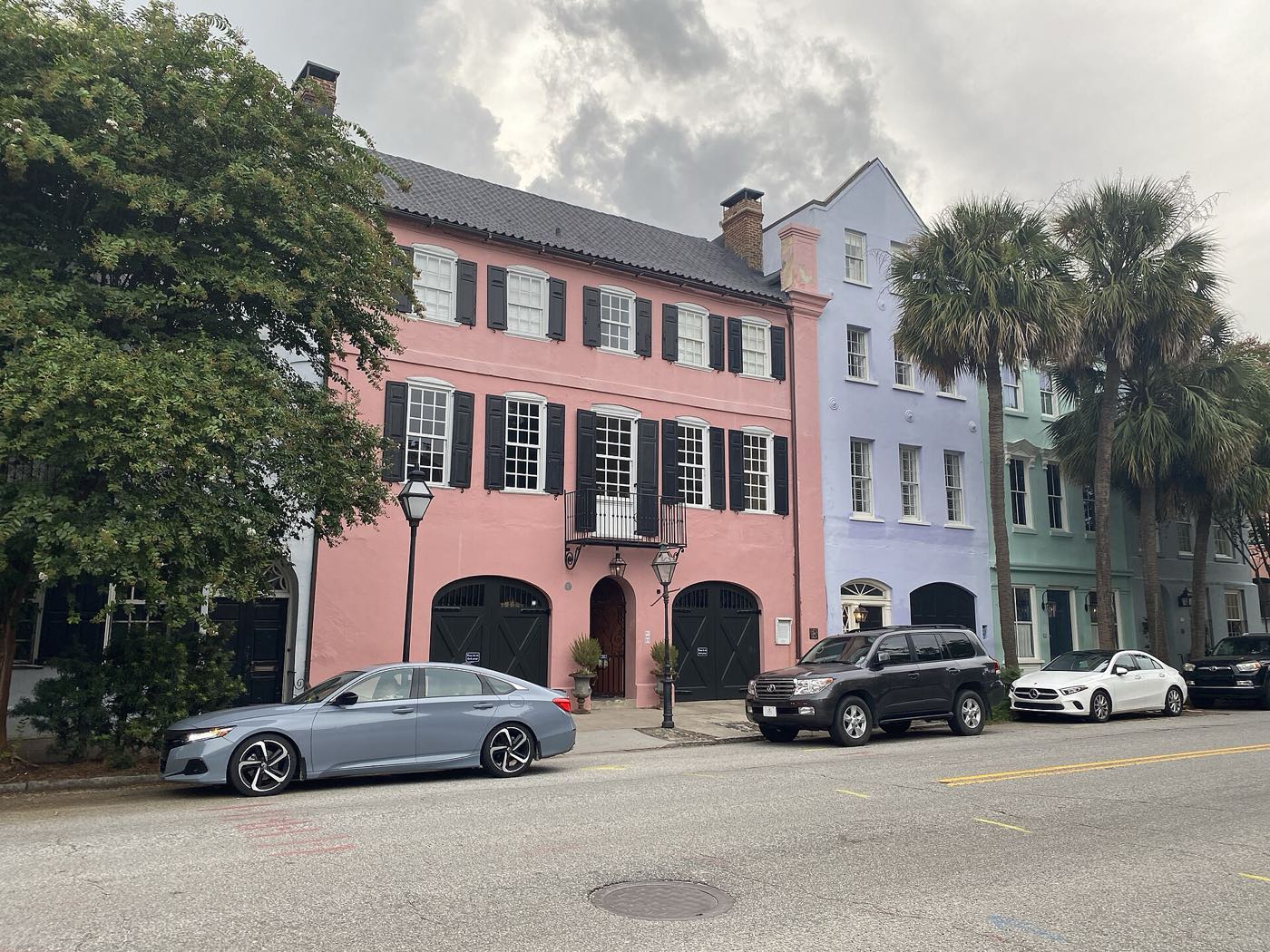
Rainbow Row's pastel historic houses on East Bay Street in Charleston, South Carolina

Before, during, or after — we answer

Call support until 9 PM, storm season included. If equipment flooded, don't power it on — call first.