
Free second opinion

Lowcountry Local Guides

Flood Zones & HVAC Equipment Elevation in the Lowcountry: What the Rules Require

In the Charleston area's mapped flood zones, mechanical equipment is regulated: Charleston County requires replacement HVAC systems to be elevated, and when a property undergoes a 'substantial improvement' the system must go to or above the base flood elevation plus freeboard. The City of Charleston requires new construction in the Special Flood Hazard Area to be designed 2 feet above base flood elevation. Look up your zone before you plan equipment — height is a code requirement, not a preference.

Find your zone first

FEMA's Flood Map Service Center and the City of Charleston's floodplain resources tell you whether your lot is in an AE zone (a studied flood area with a set base flood elevation), a VE zone (coastal high-hazard with wave action — the barrier islands), or Zone X (lower risk). That designation drives everything: platform height, strapping, and even whether a ground-level pad is legal on your property.

What the local rules actually say

Charleston County's floodplain management guidance requires replacement HVAC systems to be elevated, and during a 'substantial improvement' (major renovation or repair exceeding the ordinance threshold) the HVAC system must be elevated to or above base flood elevation plus the required freeboard. The City of Charleston's floodplain development rules, effective July 2020, require new residential and non-residential construction in the Special Flood Hazard Area to be designed 2 feet above base flood elevation — the Design Flood Elevation.

For homeowners the practical version is: when your system is replaced, that's the moment elevation gets corrected. We build code-compliant elevated stands and platforms as part of coastal and peninsula installations — engineered for the wind exposure, not just the water height.

  • Replacement time = elevation time under county guidance
  • City of Charleston: 2-ft freeboard above BFE for new construction in the SFHA
  • VE zones (barrier islands) add wave and wind engineering
  • Elevated equipment also survives the storms that flood ground-level pads
Official resources

Written and reviewed by the Holy City Heating & Air team

Licensed South Carolina mechanical contractor (License #M113404, verifiable at LLR Online) — local technicians serving Charleston and the Lowcountry since 2015. See our certifications & awards and our story.

Last updated July 4, 2026 · Guides are grounded in what our technicians see in Charleston homes; official sources are linked above where a claim depends on them. Every recommendation still needs an in-person diagnosis.

Frequently asked questions


How do I find my property's flood zone?

Use the FEMA Flood Map Service Center (msc.fema.gov) or the City of Charleston's floodplain pages, or ask us — we check the zone and base flood elevation as part of any coastal or peninsula installation quote.

Does my replacement AC really have to go on a platform?

In mapped flood zones, Charleston County guidance requires replacement HVAC systems to be elevated — and if you're doing a substantial improvement, to or above BFE plus freeboard. It also just makes sense: a condenser that survives a storm-surge event pays for its platform many times over.

What's different on the barrier islands?

VE zones add wave action to the equation: equipment platforms need engineering for hydrodynamic and wind loads, not just height. Salt-air corrosion protection matters at the same time — see our coastal equipment guidance.

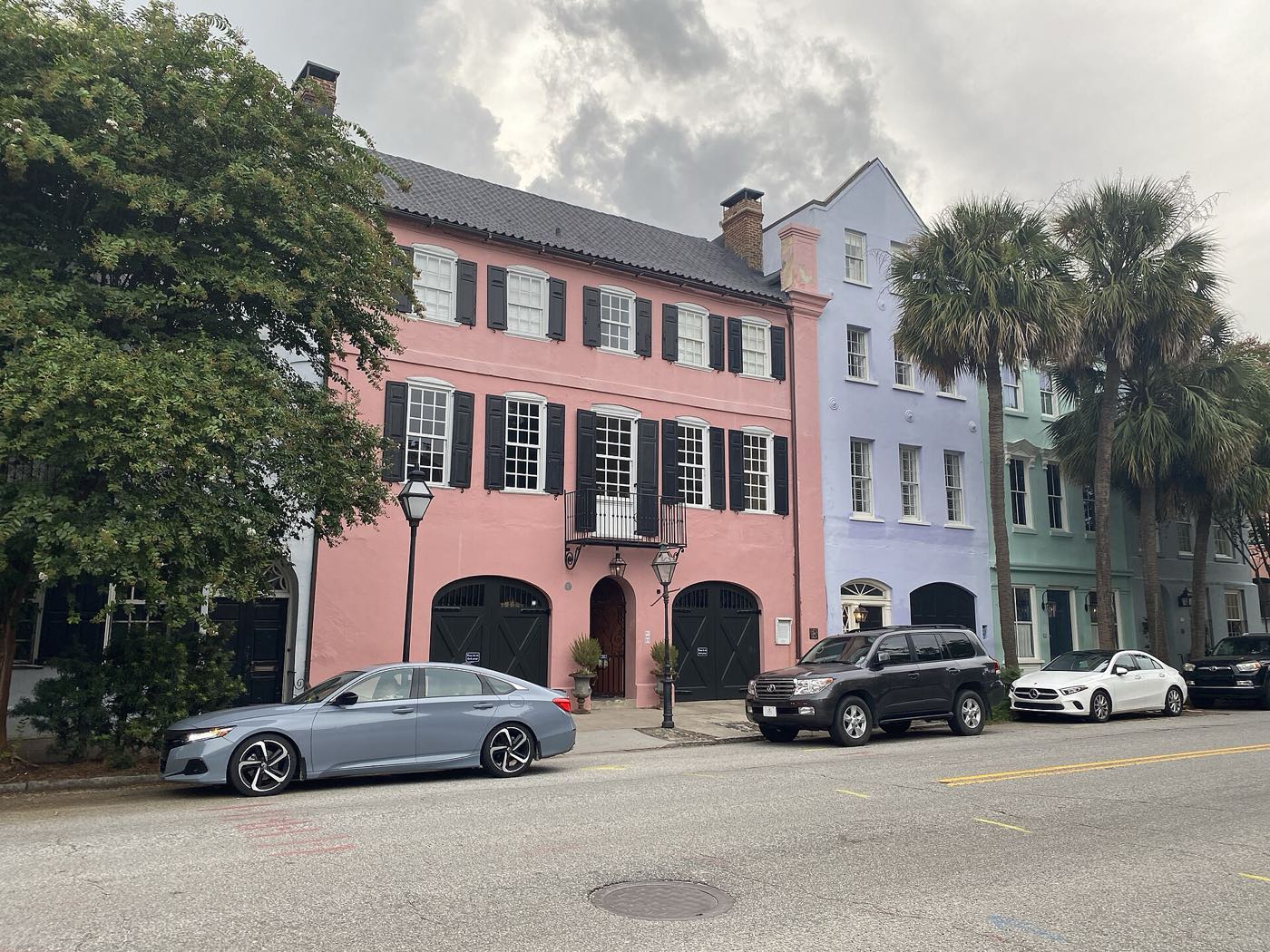
Rainbow Row's pastel historic houses on East Bay Street in Charleston, South Carolina

Y’all deserve to be comfortable.

Schedule an appointment with us today — or call and talk to a real person, until 9 PM.